Andor season 2 has taken up residence in my head in a way that few TV shows do and none have since Sense8. This post is an attempt to articulate some of the reasons why I like it, given that it is, from a certain point of view, just Star Wars.
This post is spoiler-free.
I’ve been watching Star Wars since I first saw it in East Kilbride cinema on UK release in 1978. Over the past half century I have followed the films and TV series, including the animated series, and dipped into the novels. Much as I have, for the most part, enjoyed the recent TV shows as casual viewing, they don’t do anything new with the base material; I’ve seen them described as dramatised fan fiction and that has a ring of truth. A major problem raised by Andor is that it implicitly highlights issues with those other Star Wars shows (and films) and the two principal issues it spotlights are their circumscribed writing and constrained imagination.
The thing is, the other shows and films all focus one way or another on the fantasy/sword and sorcery elements of the Force, the Jedi and the Sith. Andor dispenses with those elements almost completely, although it does touch on the Force, recognising that the Force is diagnostic of Star Wars.
Andor also presents the brutality of the Empire in ways rarely seen since we saw the smouldering skeletons of Lars and Beru in Star Wars (1977). The cruelty is much more tangible than pantomime villains such as Darth Vader or Emperor Palpatine. The rebellion here is not about abstract struggles between the light and dark sides of the Force, it arises from Imperial oppression.
Star Wars has been political since its inception; it is other things as well, but there is a political core. The genius of Lucas was to wrap so many contemporary elements and resonances in a fairy-tale package, though, over time, the fairy-tale wrapping has been mistaken for the packaged goods. The way the stories have developed over the past half century has often obscured the metaphorical payload or treated the struggle against the Empire as simply part of the mise-en-scene and/or simplified it into Robin Hood terms (Robin good, Sheriff of Nottingham bad.) Andor takes the politics seriously and is written by a very talented writer who knows his history. Tony Gilroy rips away the fancy wrapping and exposes what’s in the box.
(Some readers might object that aspects of this have been explored in the Expanded Universe of books and comics, and no doubt that is correct. However, I have only dipped into the books and, I have to say, haven’t really enjoyed most of those I’ve read, so can’t really comment on that.)
The premise of Andor is simple: what happened to create the rebellion that Luke Skywalker parachutes into? Who were the rebels? What did they rebel against? What shaped them as people? This premise is extended also to two of the principal antagonists, Syril Karn and Dedra Meero, who are also two of the most compelling characters in the show.
At the core is the titular protagonist Cassian Andor who features in Rogue One. We follow his journey from small-time thief looking for his sister to the hardened revolutionary of Rogue One, but he is only one player in a larger movement. We also see the radicalisation of Senator Mon Mothma, the role of social and political elites, and multiple squabbling factions who may or may not be the People’s Popular Front of Judea. We get cynical manoeuvring by Imperial security forces and revolutionary masterminds alike. None of the main characters are cyphers, most are morally complex. Storylines echo and mirror each other as they intertwine: we condemn the actions and attitudes of Imperial characters without necessarily noticing that the radicals are doing and thinking exactly the same things. There are no gratuitous redemption arcs; bad things happen to good people. All is brought to life by actors and actresses allowed to be at the very top of their game.
The result is that episodes 2.07, 2.08 and 2.09, which deal with the build up to the Ghorman Massacre, the massacre itself and its immediate aftermath have been hailed as three of the best executed episodes in recent TV, not simply in the Star Wars universe. The final three episodes, 2.10, 2.11 and 2.12, are perfect.
Andor implicitly questions the focus on militarised mysticism of the rest of Star Wars. It isn’t that other aspects of that universe have not previously featured, more that Andor shifts the core paradigm away from fights between samurai in space to the lives of everyone else in that universe.
Andor forces us to conclude that exploring the Star Wars galaxy solely through the Jedi and Sith is like exploring the course of World War 2 solely through internal doctrinal arguments in the Vatican and factional infighting in the Swiss Guard.
That isn’t to say that the Force is something to be ignored, just that there are other ways to explore and engage with it, much as the machinations of the Culture are only suggested fleetingly at the close of Iain M Banks’s Inversions.
Andor has often been described as Star Wars for grown-ups, but there’s more to it than that: to date, in broad terms, Star Wars as a ‘franchise’ (I dislike that term) has devolved into space opera and fantasy; Andor returns it to science fiction by engaging with the central metaphors of the original, as did The Last Jedi.
From the moment the Star Wars universe began to expand with the release of The Empire Strikes Back and the early novelisations, it has been a very flexible palette with scope for many different stories and tonalities. I do not think that from now on every new release should be a gritty political drama, but I do think that we can hope that everything now should be seen creatively as before and after Andor: Andor has raised the bar of what we should hope, and rebellions are built on hope.
Friday night was Nearly Dan at the Liquid Room. They were great last year, off the chart this year, delivering a joyous show from start to finish. I ended up with a crocked back from dad dancing and a hoarse voice from singing. Roll on their next visit.
Last night was East Kilbride for an old friend’s 65th, another good night with some people I hadn’t met with for a very long time, remembering things I’d forgotten. Photographs and memories, as they say.
***
As you know, I don’t watch much TV, but the return of Andor (Disney) for its second and final season is a must-watch. The Star Wars universe is full of possibilities, some of which are better realised than others. Andor is at the complex, grown-up end of the spectrum: there are no prominent Sith or Jedi or even, so far at least, Force users, but there is plenty of moral ambiguity in both Empire and Rebellion.
I noted previously that one of George Lucas’s achievements in Star Wars (1977/8) was to gull a generation of Americans into supporting the Vietcong in their uprising against the evil Empire. Andor casts a more focused eye on something similar, on oppression and radicalisation. It also picks up on the Canto-Bight sequence in The Last Jedi, looking at the role of the Empire’s elites in scenes reminiscent of The Godfather. The tone is reinforced in a conversation in episode 1.11 between Saw Gerrera (Forest Whitaker) and Luthen Rael (Stellan Skarsgård) regarding a sacrificial gambit – allowing fellow rebels to go to their deaths because to do otherwise would alert Imperial intelligence to a mole.
‘For the greater good.’
‘Call it what you want.’
‘Let’s call it war.’
Dedra sees your childish euphemisms and judges you harshly
Star Wars, in fact.
One interesting thing arising from episode 2.03 is the reaction, from some quarters at least, to the attempted sexual assault on one of the core characters by a slimy Imperial functionary. There is a cadre of online commentators who find this ‘problematic,’ to the extent that they are unable to to utter the word ‘rape,’ preferring the TikTok-inspired substitution ‘grape,’ as if the correct word cannot be said or written in case the least mention invokes discomfort by some kind of sympathetic magic; this is infantilisation. No doubt some of them are the same people who objected to the excellent The Acolyte as too woke.
The thing is, although Andor was written and filmed some months ago, and certainly before the 2024 US election, it dramatises a familiar dynamic. The attempted sexual assault anticipates the man who, during that election, said of women, their bodies, our choice. I sometimes wonder if the commentators have any grasp of the ways in which fiction and art interact with the real world.
All quiet here because there hasn’t been much to report. The principal excitement was receiving my Flu and Covid booster vaccinations for the year and, let me tell you, the Pfizer Covid booster packed quite a punch. That was exactly a week ago and the feeling continues to linger a little.
Other odds and ends have included turning several kilos of damsons and plums into jam and looking out of the kitchen window at all the apples and wondering what to do with them. The shed has had a fresh coat of preservative ahead of winter, and we had a good visit to family in East Kilbride.
I continue to run, although I took time out after the vaccinations. I also now need to focus more on running during the day (because the nights are fair drawing in) and looking at clothing choices as the weather changes. I have no problem running at night, btw, except that Edinburgh’s roads and pavements are in such a state that the chances of injury increase markedly when you can’t see where you’re putting your feet.
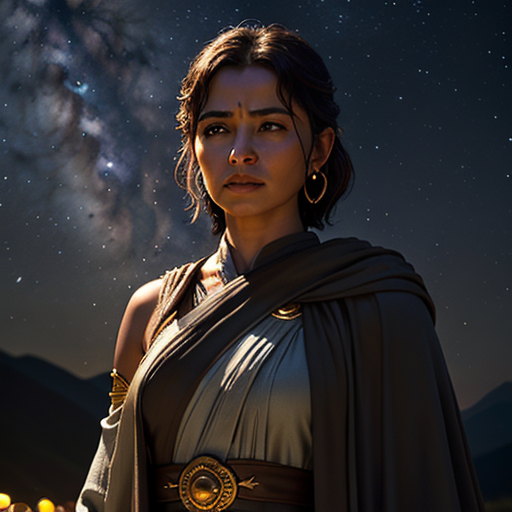
Hmmm … am I a Star Wars character or a protagonist in my own right?
On the writing front, work continues on the stories that follow up/complete Coyote in the Corner and I really need to motivate myself to get cracking on that.
In the background, I have a side project of a Star Wars story that I’m going to work up into a novella at some point (although I could divorce it from Star Wars and make it a stand-alone novella free of Lucas/Disney copyright restrictions), an urban fantasy novel set in Edinburgh that has been on the back burner for a while, and I’ve had the first inklings of aspects of concluding the Sanctuary sequence of novels.
Above all, I’ve procrastinated by watching assorted stuff on TV. Notably, I’ve warmed a lot more to Ahsoka and, on a whim, rewatched Obi-Wan Kenobi. I originally found the latter disappointing, but it stood up well on a binge rewatch, albeit that it has issues with it’s core story. My earworms from Star Trek’s Subspace Rhapsody haven’t gone away.
On the tech front, all of my laptops are ancient and my habit is to use them until they stop working to get the most value out of them. The one in the shed is a 13-year-old Windows 7 machine that works but takes longer and longer to boot up. Unusually for me, I’m toying with replacing it with a reconditioned Macbook Air to get into the Apple ecosystem. My requirements are fairly minimal – I need a robust and reliable keyboard, I need to be able to load Office Home and Student onto it and I need it to work with Dropbox.
Bruce Lee as Obi-Wing Chunobi, in Enter the Jedi (1973), an early inspiration for Star Wars
There has been a lot of Star Wars news this weekend, and it all looks jolly good, just like it always does when things are announced at big industry events. Me being me, I’ve spent time looking at some of the online reaction on YouTube; it has been entertaining.
Reaction on YouTube falls into two broad categories – on one hand, neutral or enthusiastic breakdowns of the news and of the Ahsoka trailer, on the other hand, a rash of hastily-produced videos by angry boys and men (always boys and men and usually American) in their bedrooms criticising every aspect of the announcements, frequently on the basis that Disney has ‘ruined’ Star Wars via excessive ‘wokeness.’ Often, their comments are no more than thinly disguised misogyny. I think these guys are under the impression that they have something valuable or critically worthwhile to say. They do not. Mostly they are swapping prejudices amongst themselves.
That’s not to say that there aren’t critical analyses to be made, just that these guys aren’t making them (and no, I’m under no illusions or delusions about my own scribblings either.)
What remains to be seen is the degree to which the newly announced material expands the storytelling in fun and new ways as opposed to retreading old ground. The bits of relatively recent Star Wars that I’ve enjoyed the most have been the bits that have done new things (Andor) or have brought a fresh perspective to the familiar (Rogue One). Notably, the film that was the most interesting and thoughtful about the galaxy far, far away, The Last Jedi, is the one from which the hastiest retreat was beaten. And that’s a shame.
As for the core strand of the TV material, much as I like Dave Filoni’s work, and I’ve watched it all, it rarely deepdives into the unknown. At least on the basis of what has been released so far, Ahsoka is picking up on existing books by Timothy Zahn and hatching expanded-universe easter eggs. That’s fine, and I’ll watch it, but it isn’t new.
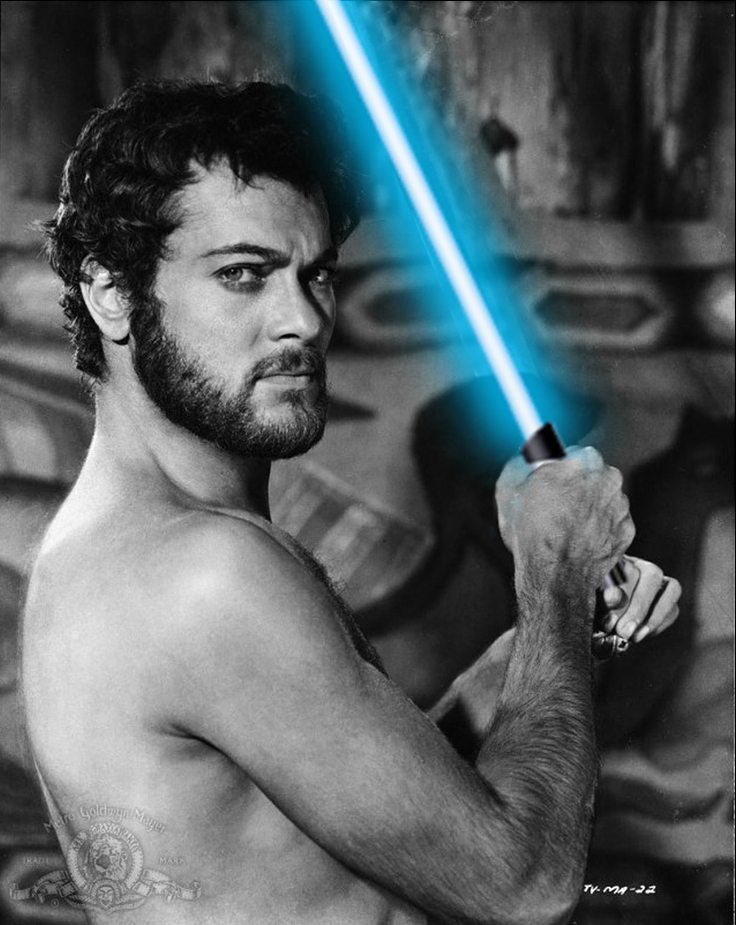
Tony Curtis as Long-John Jones in the 1958 original of The Phantom Menace
What was notable about Star Wars (the first film) was that the script had just sufficient mythology and backstory necessary to drive a single film, but no more than that. It wasn’t made to articulate a developed mythology, that all sprang into being when the success of the first film spawned sequels, prequels and the expanded universe, and took on a life of its own.
In a sense, the onus on the current corporate production team, the heirs to the empire, is neither more nor less than to churn out entertainment and make a return. There is no harm or shame in mindless entertainment, except that, after a while, repetition becomes boring. Hence the need for the innovation in either the stories or the storytelling. It doesn’t have to be Tarkovsky (though a Tarkovsky Star Wars would be something to behold), but it does need to engage the imagination of the intended viewer.
The strengths of the original film and the subsequent mythology are also the root of the inherent problems with the material: the embedding of the (male) hero’s journey monomyth, and the primitive dualism of the conceptions of the Force. This sets up fundamental notions of good and bad, light and dark, noble and ignoble, sacred and profane. That works for one or two films, but strains when translated to a larger scale. The expanded universe sometimes grappled with this problem, as did the Clone Wars animated series written under head writer Christian Taylor. Clone Wars, though, was a series of rapid-fire stories designed for a younger audience, and that determined how issues were raised and addressed in service to a larger plot.
When I say ‘fun and new,’ I mean stories that consciously question the underlying mythology and thus open out the possibilities for storytelling. The Last Jedi did that and was far and away the most interesting and radical of the recent trilogy. The words put into the mouth of Luke Skywalker by Rian Johnson, it’s time for the Jedi to end, were exactly the correct sentiment. And that’s also why, of the three announced films, it is the one featuring Rey that has the potential to be the most interesting and transformative, assuming that they don’t chicken out. Quite what this story will involve, given that it needs some kind of antagonist, I don’t know, but I reckon there is an interesting story to be told with Rey as protagonist, one that goes beyond the naïve dualism of Jedi and Sith.
For ages I’ve had a notion of a Star Wars story sketched in a notebook. I probably won’t write the story because I can’t do the technobabble, but every so often it creeps out of my subconscious. I rewatched The Force Awakens, The Last Jedi and the Rise of Skywalker with an eye on one particular character who would be the protagonist of the putative story.
That character was Rey and the story in the notebook, which remains only in note form, arose from my interest in mysticism and my long-standing habit of reading Hermann Hesse. If a Rey film is in the works, then I’m pretty sure I won’t write the story now. I could do it as fan-fiction, I guess, but it’s not as though I’m short of other things to write.
Three years ago, more or less, I went to see Star Wars: The Rise of Skywalker at the cinema, back in the days when I went to the cinema (a bit more on that below). I wasn’t greatly impressed with the film at the time for the reasons I wrote about here.
I watch a lot of Star Wars stuff on TV and have been known to read the novels as well, continually searching for a really good Star Wars book, but the one thing I haven’t done is go back and rewatch The Rise of Skywalker. In the past few days I’ve watched it twice, albeit that I hit fast forward a lot during the first viewing. And … I’ve warmed towards the film somewhat.
I watched it because for ages I’ve had a notion of a Star Wars story sketched in a notebook. I probably won’t write the story because I can’t do the technobabble, but every so often it creeps out of my subconscious. I rewatched The Force Awakens, The Last Jedi and the Rise of Skywalker with an eye on one particular character who would be the protagonist of the putative story.
I still think that the film has significant flaws – the side-lining of significant characters such as Rose and, to a lesser degree, Finn, the fan-service of the denouement in particular, and the general cheesiness of the narrative. More importantly, it ran away scared from the opportunities that The Last Jedi opened up and reverted to a boilerplate Star Wars story. I agree with younger me that there is probably a much better movie in there waiting to get out, but, I concede, The Rise of Skywalker isn’t as bad as my memory told me it was.
***
I haven’t been to the cinema since before the pandemic. This isn’t entirely due to the pandemic itself. I mentioned here in passing 5 years ago (here) that I have some high-frequency hearing loss. I had an updated hearing test yesterday and the loss has spread to the fringes of mid-frequencies. It is not enough to justify hearing aids because the effect of the loss is only obvious in some situations, but it’s also why I have avoided the cinema. Generally speaking, the sound presentation in a cinema is such that I sometimes have a hard time working out what is being said. It is much easier to watch films at home with headphones on (and sometimes subtitles).
I got a recommendation that I should now be getting my hearing tested annually, which I’m happy to do (the tests are free.)
This morning began, as Fridays have for the past few weeks, by streaming The Mandalorian. It was the final episode of season 2 today and the show went out with a bang. I will post no spoilers except to say (a) I enjoyed it but (b) wonder where the writers will take it from here.
I also had fun looking at Twitter reactions. They are overwhelmingly, but not unanimously, positive, with lots of fanboys (all boys as far as I can tell) making cracks about the most recent sequel trilogy. I’ve written previously that:
I’ve seen this a lot over the last few years, at any rate since Ben Aaronovitch commented on a review of his Peter Grant novels. It was the fall out from that contretemps that brought both the ‘death of the author’ trope and a sense of the depth of ‘fandom’ entitlement to my awareness. It was also when I started to think that fans are great but fandom is fertile ground for toxicity.
The ossification of entitled opinion into objective fact is too engrained in ‘fandom’ now, but it still gets under my skin.
***
I retreated to the shed after lunch and tried to write. I began with a 1970 music post to get warmed up, then shifted my focus to fiction. I’m having fun with a vampire who’s experiencing programme management difficulties. Only another three hundred or so words came out though. I have my fingers crossed that I’ll manage a couple of hundred more after I’ve posted this. I won’t be taking a walk this evening as that cold persists and, much as I like the night air, it makes sense not to go out in it.
***
Something, something Brexit omnishambles, Ministers who know Foucault-all, etc. etc.
***
Music: not quite a random selection from the shelf, although it could be as I have the LP. Here’s another of my Christmas favourites. I’ll give you fair warning I might post a Christmas favourite on each evening of the coming week.



Recent Comments