History has traditionally been written in terms of distinct periods with fuzzy but real boundaries, change coalescing around the actions of key individuals, usually men. The history of popular music has followed the same pattern, with the addition of relatively rigid, though ever-proliferating, genre distinctions. Historiography is changing, and the focus is moving towards seeing continuity as much as change, and identifying previously obscured contributions by women. The inherent racism and colonialism of previous approaches is also being dismantled. To be clear, by racism here I do not mean overtly prejudicial attitudes, neccessarily, though they exist, but rather tacit structures in learned and assumed ways of thinking.
Writing about music ought to be undergoing a similar change; in part it is, but it wasn’t in 1970, and the critical writing of the time, churned out weekly in reviews and interviews, was a soup of genre categories and attitudes to race and gender that are problematic when read now. This was true even as the notion of ‘progressive’ music was taking hold, partly rooted in the notion of musicians going beyond the confines of commercial pop, but also highlighting artists who blurred simple genre definitions. Too much of the writing of the time is from the perspective white men and, in the case of the British musical press, white men living in London. Women’s voices, and voices of colour, overwhelmingly come from the interviewees, not interviewers.
The notion of there being great men who led change in the midst of continuity is as problematic in popular music as it is in popular history. It is true, though, that there are individuals who might be described as nodes in a network; attractors towards whom like-minded people spin. In the late nineteen-sixties London scene, two of those individuals, both born in 1947, were Julie Driscoll and Keith Tippett.
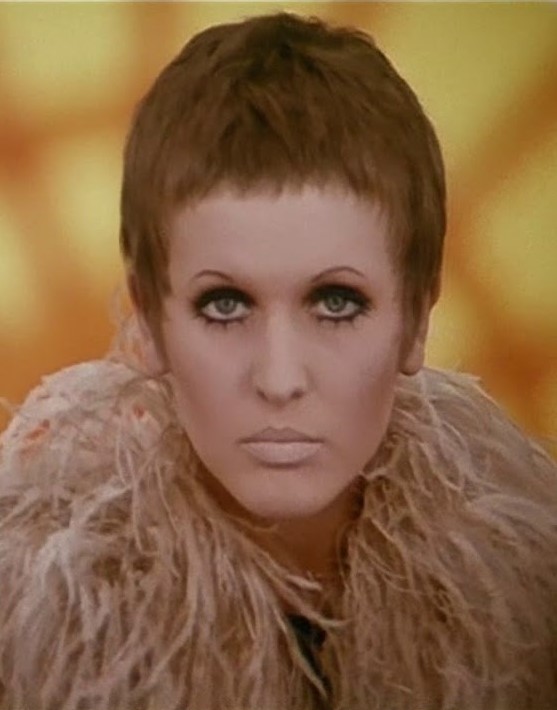
Julie Driscoll in 1968
Tippett arrived in London from Bristol with a youthful enthusiasm for bebop, keen to make his mark on the emergent London jazz scene. English jazz was finding new directions typified by, but not limited by, the approach of Stan Tracey.
Driscoll was a veteran of Steampacket and Trinity and had hits with Wheel’s on Fire and Season of the Witch. She had contributed songs to Trinty’s second album, but while in New York bought a Martin acoustic guitar and began writing in earnest, When she recorded her solo album, 1969, several of the songs were arranged by Tippett and the musicians were drawn from Tippett’s sextet, augmented by, amongst others, Chris Spedding on guitar. Tippett recorded his debut album in 1968, You Are Here … I Am There.

Melody Maker 16 May 1970
Arguments and machinations delayed the release of both albums. Tippett’s appeared in 1970; Driscoll’s in 1971, by which time she and Tippett were married, and neither album reflected where they were at by then. Tippett was in demand through 1970, appearing on King Crimson’s In The Wake of Poseidon and Lizard and also on Shelagh McDonald’s lovely debut album, all three of which will have their own entries in due course.
In January 1970, Melody Maker had Tippett in their list of artists to watch out for in the coming year, Richard Williams saying he was
currently leading a band which is attracting a lot of interest from people who don’t normally dig jazz very strongly. Part of the reason for this is the band’s youthful appearance and outlook (for example, Julie Driscoll has sung with them), but most of all their music has a freshness and a vigour which makes it irresistable … They will soon be a force to be reckoned with.
By January 1971, Melody Maker’s Michael Watts would describe Tippett as ‘arguably the most important figure on the contemporary British music scene.’
Both1969 and You Are Here … I Am There stand the test of time in their own ways. Julie’s album falls outside my self-imposed timeline, but I’ll talk about it anyway.
Driscoll was on a journey out of her psych-pop background, and on 1969 her lyrics, guitar playing and songs are coming from another root altogether. The only track on the album that sounds in any way dated is the opener, A New Awakening, and then only because the tone and style of Spedding’s guitar and the style of stereo separation of the instruments mark it as a product of the late sixties. Driscoll’s voice, reminiscent of Dusty Springfield on Season of the Witch, here is reminscent sometimes of Sandy Denny, but more assertive and harder edged. Her rhythm acoustic guitar playing is excellent. The whole album is on YouTube and you really owe it to yourself to listen to it.
Tippett’s You Are Here … I Am There, blends its influences in a very English way, with a strangely pastoral feel; although it is labelled as jazz, it is sui generis without a hint of America about it. It is subversively melodic and an album of compelling beauty. Listen here on Spotify even if, or possibly particularly if, you ‘don’t normally dig jazz very strongly’.
Here’s some Jools to groove along to.

Recent Comments