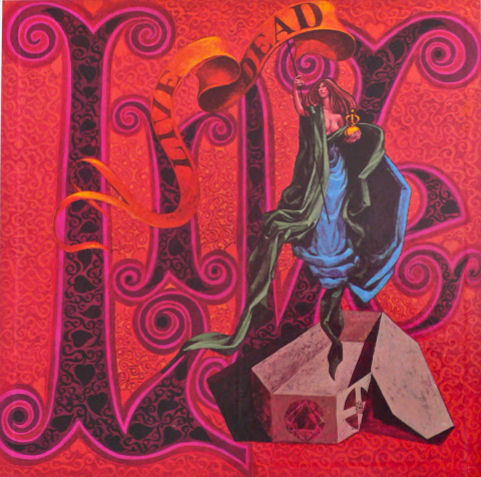
Live/Dead
I have a long history of disliking the Grateful Dead, a dislike that lasted right up until the day I realised I was a Deadhead. As I write, the shelves to my left contain most of their studio albums on CD, and several days worth of live recordings, the most recent of which arrived only yesterday.
It took me a while to appreciate the charms of Live/Dead, my preferences are for later periods in their history, though they’re variable preferences. All the performances on the album are drawn from early 1969, and by the time the Dead made their live debut in the UK, at the Hollywood Festival in 1970, they were, per Phil Lesh, playing everything differently anyway. The recordings for Live/Dead were made while the band were recording Aoxomoxoa, long before their breakthroughs of Workingman’s Dead and American Beauty.
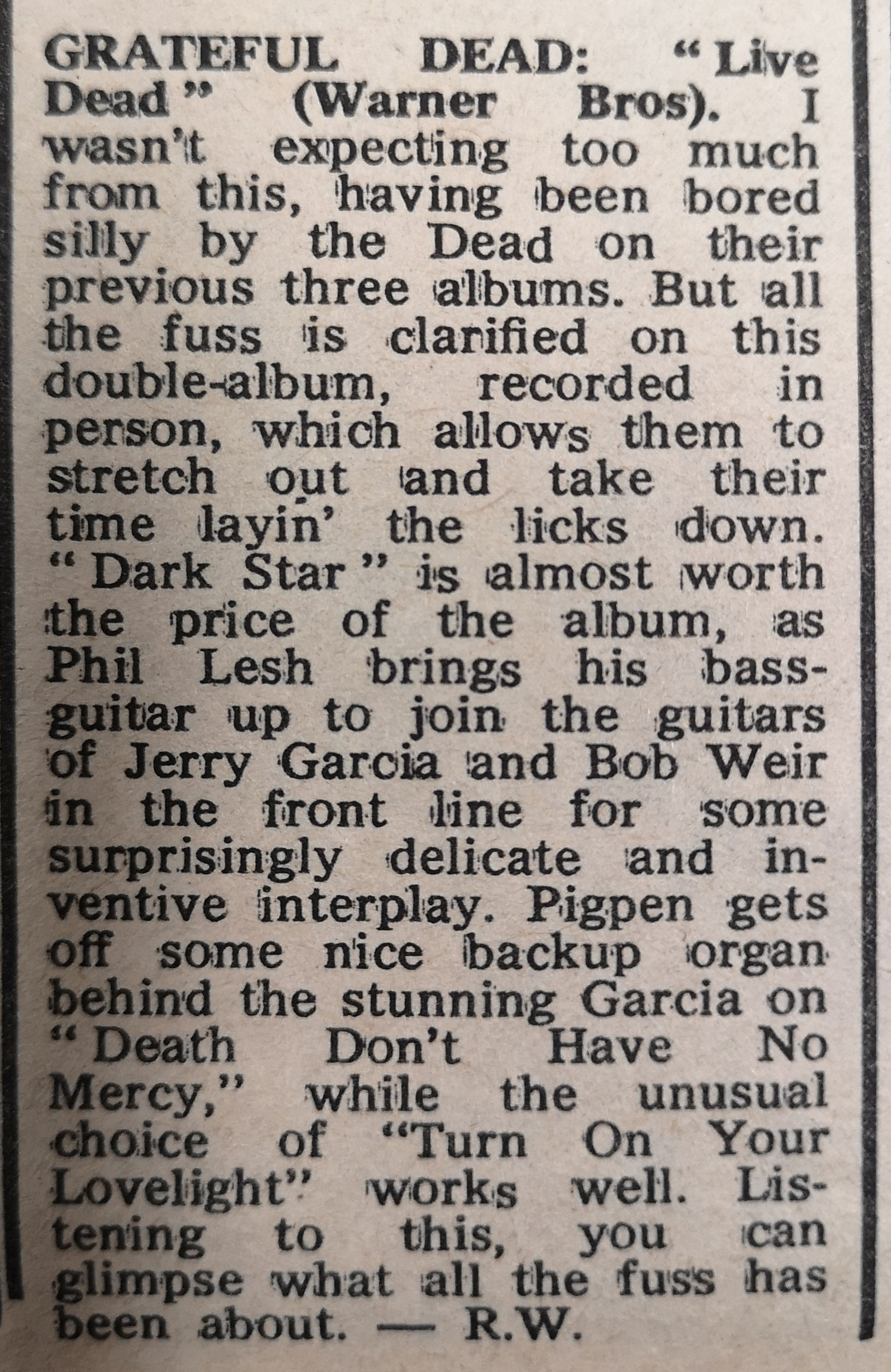
Melody Maker Review
The album was released in the US in 1969 but only made its way into the UK in 1970, and it was a long time before it was reviewed. Both the Melody Maker and New Musical Express reviews hint why: the album was low on the list of priorities for review by critics who hadn’t been impressed by their earlier albums.
Live/Dead was the seven-piece band with Tom Constanten on keyboards (he’d leave at the time of the New Orleans drug bust), both drummers and Pigpen. The eclectic lineup flows through into the contrasting material (Dark Star -v- Turn On Your Love Light), with a tap root in R’n’B that stuck with them until after Pigpen’s death (his last show was 17 June 1972, just after their triumphant European tour; he died in March 1973.)
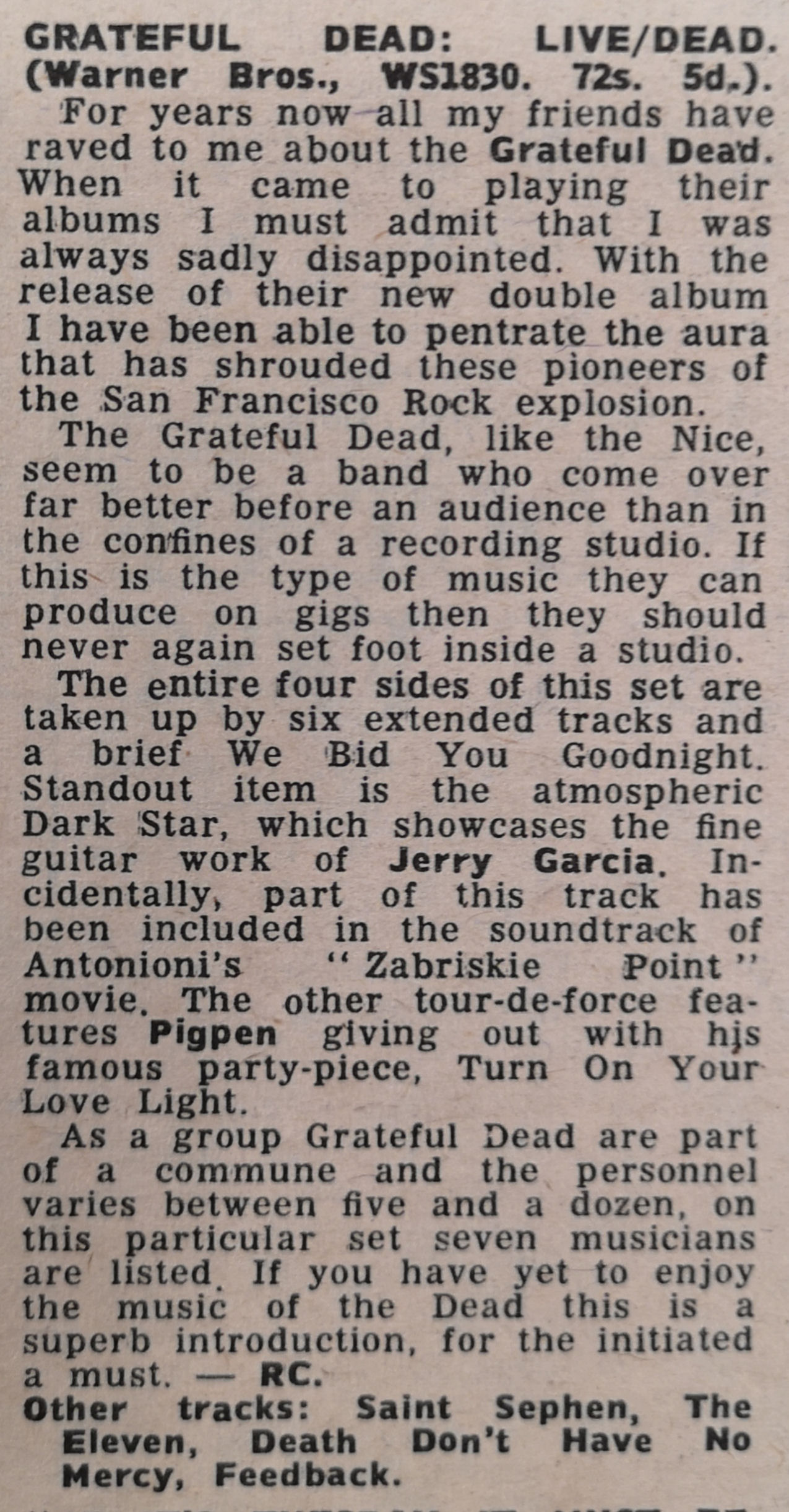
New Musical Express
Listening now, it’s remarkable how much of what was to come is latent in these performances, as always almost entirely improvised. When the 1970 studio albums came out, lots was asked about whether they’d been taking tips from Crosby Stills and Nash, but And We Bid You Goodnight is unaccompanied harmony singing; a short harmony section lurks too at the end of Dark Star. Oddly, listening to the album again this evening, I also spotted a couple of licks in Dark Star that reminded me a lot of where Yes started to go in 1970/1.
I’m struck by how revelatory the album was for both of the British critics I’ve pasted in here. That too prefigures a lot of the Dead’s future: whatever you think of their studio albums (and I think they’re better than they’re given credit for), it is live that they earned their audience and their longevity. Given Brit. proclivities towards guitar heroes, it’s also interesting to see Garcia, still playing a Gibson SG at that point, getting belated recognition, especially from Richard Williams, a jazzer at heart. I should add that, although the attention is usually on Garcia, Phil Lesh’s bass is important throughout, Outside of Deadhead circles, I don’t think enough is made of Lesh as a musician.
After years of losing money and being in debt to Warner Brothers, Live/Dead represented the beginnings of a reversal of fortune, both critically and, importantly, commercially. What more is there to say? I’m biased because I love the band. ’69 Dead isn’t my favourite Dead, but it’s still the Dead, and Live/Dead is a classic set.
“Outside of Deadhead circles, I don’t think enough is made of Lesh as a musician.”
Amen to that, brother. There isn’t a bass player from the 70s, that I consider great or influential, in whose work you can’t spot echoes and influences from Phil Lesh’s playing and approach. In that respect he’s as important as Jamie Jameson or Carol Kaye, and if I’m right, that’s the highest accolade, isn’t it ?