Jan 20, 2014 | Dead Water
Since my last note, about Far, Far From Ypres, I’ve seen a couple of reviews of the show which criticise it for similar, though distinct, reasons. In one case the criticism was that there didn’t seem to be an organising ‘message’ around which the show was themed. The second criticism concerned an absence of ‘theatricality’ in the production.
I can see the point of both criticisms which are well argued but I agree with neither.
The audience did not and does not require to be told what to think and, in the case of WW1, being told what to think has become endemic. There are a number of embedded narratives about WW1 and it is wise to exercise a critical intelligence with regard to all of them. The strength of Far, Far From Ypres is that, in the main, it left didacticism at home. It presented a number of voices and left the audience to reach its own conclusions. To include Music Hall and populist songs of the period was not to deploy imperialist tub-thumping propaganda but a proper reflection of the times in which songs of the trenches and songs on the home-front co-existed. Neither tells a complete story and the juxtaposition of them is a lot more interesting than a partial selection. A ‘message’ would be to impose an interpretation on something which, in the final analysis, defies simple interpretation.
And there were inconvenient facts lurking in the narrative too. The songs from the trenches mock officers and yet, as the script also notes, the life expectancy of a junior officer at the front was less than six weeks. Should we ‘honour’ the evisceration of a Private by whizzbang shrapnel and close our eyes to the machine-gunning of a nineteen year old NCO? Did the parents of one grieve any less than the parents of the other? Was the pain of one set of siblings and sweethearts of lesser consequence?
There is a particularly strong narrative in the West of Scotland around Red Clydeside which is an important story that must be told. But at the same time as those events were unfolding, thousands of Scots were fighting and dying in the trenches. I make no argument in favour of patriotic fervour or jingoism, and no-one who knows me would suspect that; but neither will I try to ignore it and pretend that it was of no consequence. It is not a matter of either/or but of both. That is the difference between history and polemic and it is why Far, Far From Ypres did not require a didactic ‘message’.
Perhaps it is because I’m an old folkie at heart that the lack of ‘theatricality’ didn’t bother me. Properly delivered, which they were, the songs do the work for you. At Buchanan Street bus station on the way home a party of pensioners who had been at the show were boarding the same bus as us. The women were commenting on the state of their make-up because the performance had moved them to tears. The men tried hard to look stoical. I have seen more theatrical events achieve less in the way of impact.
Jan 18, 2014 | Dead Water
Far, Far From Ypres is a show I missed when it was first performed. When, last October, its revival was announced for Celtic Connections in 2014 I had tickets within an hour. Lindsay and I went last night.

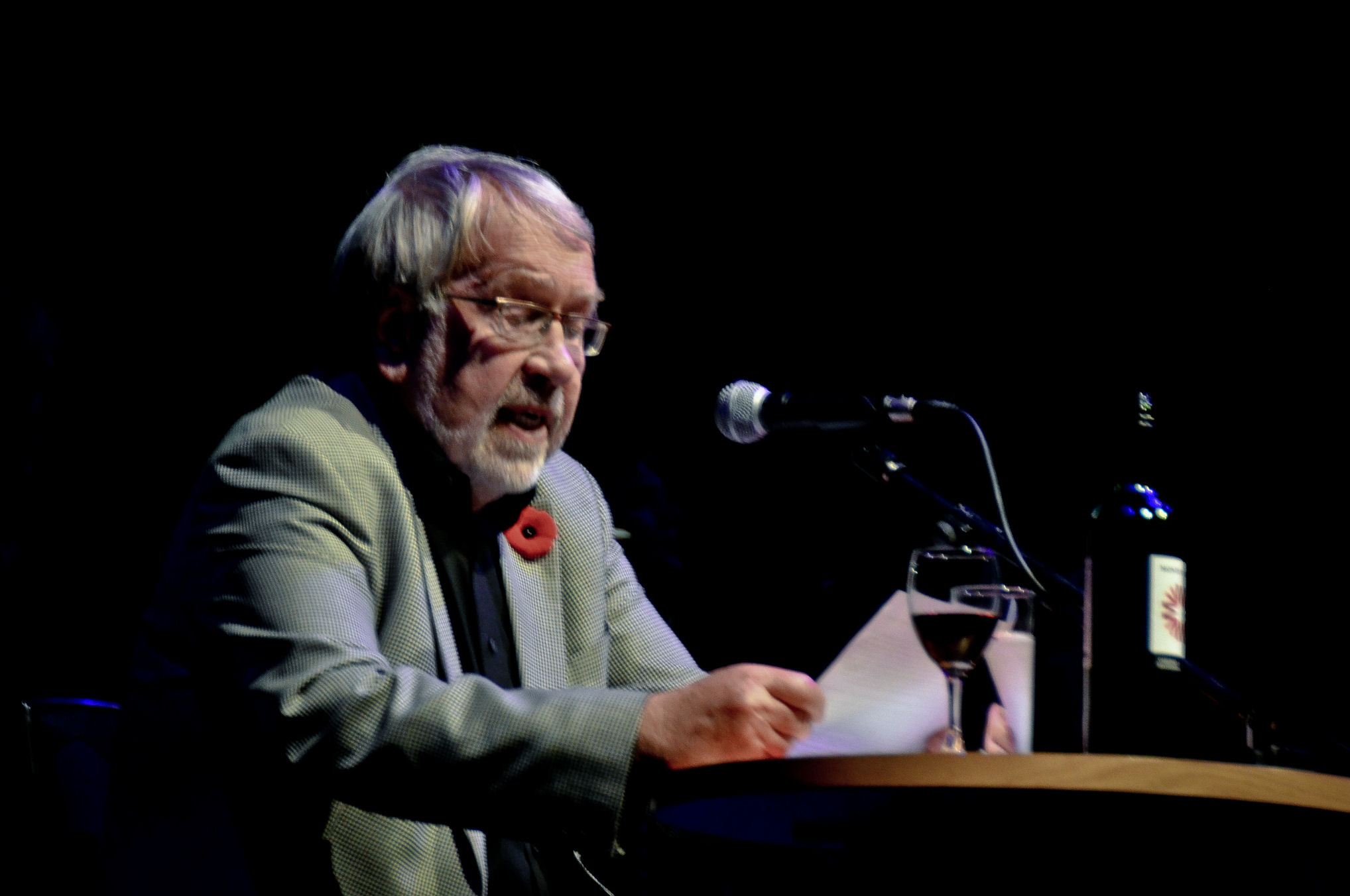
Iain Anderson, the narrator
The show is based around the songs of World War One with a linking narrative telling the story of an ‘everyman’ soldier, Jimmy MacDonald, who comes from ‘any village, town or city in Scotland’. The focus is consciously Scottish from the Music Hall urgings of ‘Keep Right On to the End of the Road’ to Jim Malcolm’s wonderful modern song ‘Jimmy’s Gone To Flanders’.
The songs include Music Hall, popular songs of the era, some recent folk songs and, of course, the songs of the Trenches. It was, and is, a powerful show that I would not hesitate either to recommend or to see again.
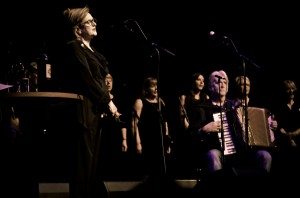
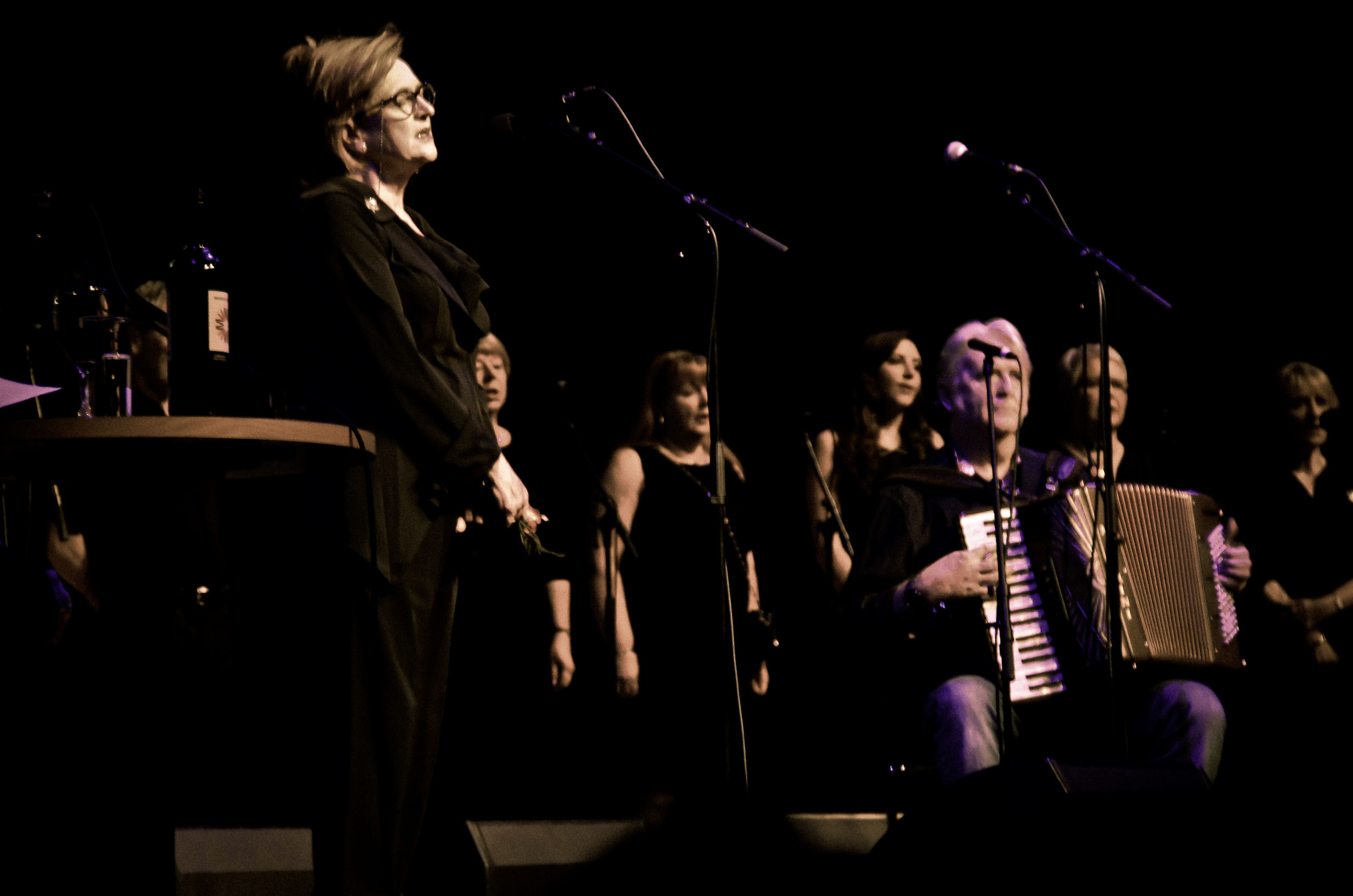
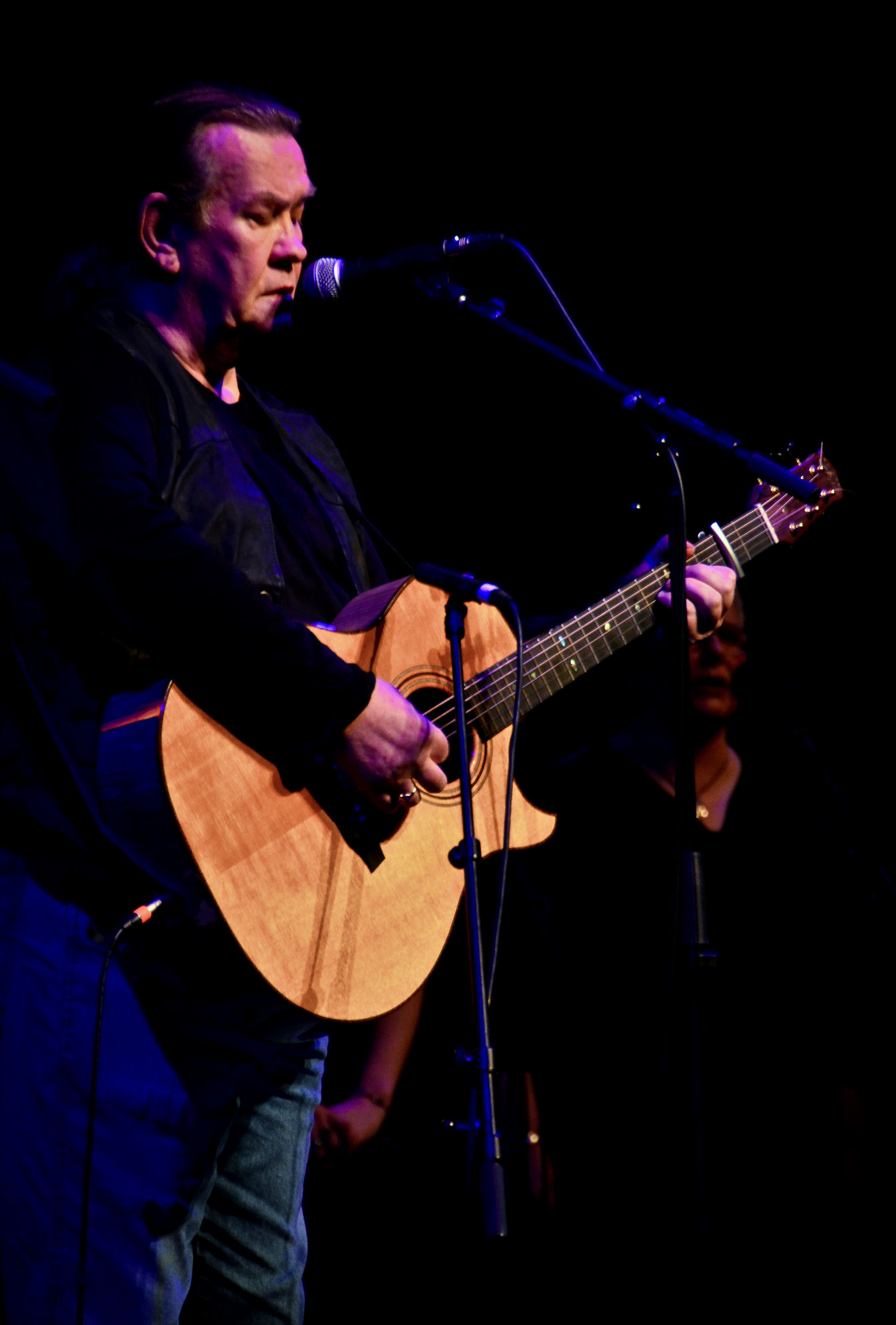
Barbara Dickson and Phil Cunningham; ‘Roses of Picardy’
The show gained immensely from the sheer quality of the talent on stage. This included well-established performers such as Barbara Dickson, Phil Cunningham and Dick Gaughan and also younger performers such as Siobhan Miller who was outstanding all evening. The performance was, though, an ensemble piece and all the more effective for that.
A century after its commencement, World War One continues to haunt our culture and not just in arguments with idiots such as Michael Gove. I think, tritely perhaps, there are many reasons for this. The reasons range from admiration for those who went and fought and died despite, as the war went on, knowledge of their likely fate, to horrified fascination at the industrialisation of carnage, the application of the idea of the assembly Line to the efficient manufacture of death.
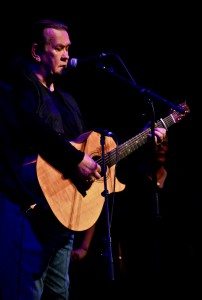
Dick Gaughan
There is also, I often sense, a feeling that it was World War One that finally stripped away any residual public innocence about the nature of war.
World War One also seems to me to mark the end of something else, the end of a way of life in the towns and villages and communities of Britain. The coup de grace may have been delivered by WW2 but it was WW1 that dealt the fatal blow. This is not only because of the scale of the butchery and the annihilation of a generation but also because of what followed. For example the decline of a rural way of life into our modern agricultural monoculture (an error not made by the French).
There is also, I think, a wary awareness and shadowy fear of what mass conflicts such as World Wars One and Two exemplify. The value of performances such as Far, Far From Ypres is precisely that they keep that awareness to the forefront as the generations who lived through those wars fade.
That is also why, despite my detestation for the military flummery and foolishness that accompanies it, I always wear a poppy at remembrance time – lest we forget.
Jan 12, 2014 | Uncategorized
After yesterday’s post I made a fresh effort to track down George Weston and Julia and I think I’ve done it, or at least found their wedding and hence her maiden name – Chapman. There is still a lot of work to do though.
I couldn’t find anything in the records which led me to think that her family were Romany. They might have been but as yet I haven’t got anything except the family story. However, speaking to my mum I got a slightly different slant. Apparently Julia told fortunes as a sideline and also had a habit of disappearing. It could be that the “Romany” tag was just something said in the family to explain her behaviour.
Time and research will no doubt tell
Jan 11, 2014 | Music
Sometime around 1981 a friend of a friend played me an LP by a band called Mr Fox, a folk-rock band that had a brief moment in the sun before falling into popular obscurity. The album, first released in 1971, was called The Gipsy and, although I wasn’t sure about most of it, I loved the title track which I copied to a cassette and then obsessed over for a while. Over the years elements of the tune would come back to me as earworms, usually whenever I heard mention of Wensleydale because of the opening couplet of one of the verses:
So next morning I took the road into Wensleydale.
Moorland before me stretched out like a dream.
I listened to them again just before Christmas on Spotify and immediately bought a cd which brings together their only two albums. While a couple of the tracks have dated, for the most part this remains vital music. Like most of the ‘folk-rock’ of that period the material which I most like now is that which sticks closest to the tradition and Mr. Fox were steeped in the Yorkshire Dales.
The song “The Gipsy” tells of a bloke who meets a gipsy girl in the pub and, after a few months, decides to propose to her. When he gets to her place her dad tells him that she left that morning for Scotland in a caravan. He follows her from Bradford, through the Yorkshire Dales and over Buttertubs to Keld by Thwaite. I hadn’t thought too much about this until I saw a thread on Mudcat that discussed walking the route.
I haven’t been able to get that idea out of my head for a couple of days now. I’m not sure when I’d find time to do it, but the idea seems sound. Some of the interest is tangential: a distant relative, George Weston, married a Romany named Julia in, I think, 1900 although I haven’t tracked them down yet. I know almost nothing about them but I’ve always wanted to know more. Walking this route won’t help with that knowledge but it makes a connection somewhere in my head.
The song is on YouTube. I tried to upload a better recording to Soundcloud but it wouldn’t let me for rights reasons (so much for ‘fair use’), so here’s the You Tube link : Mr Fox, The Gipsy.
Jan 8, 2014 | Dead Water
Long distance train journeys used to give rise to blog posts which pondered all sorts of things, journeys being conducive to pondering. I haven’t written one for a while, despite being on many trains recently, so here we go.
I was chatting with a friend the other day whom I have never met although we chat a lot online. They said that lately they had discerned that I was feeling restless, wanted to write more, wanted to go north and walk and wanted to play more guitar. That seems reasonably accurate to me. It isn’t complete as these things do not dominate my consciousness but it is accurate so far as it goes.
As it happens I have been playing guitar a lot more recently and I have been writing – I used NaNoWriMo as a spur to get some things together and was happy enough with where I got to even though in the end other things got in the way.
The whole ‘go North’ thing is something that has obsessed my for a very long time. Being drawn towards remoteness is a constant in my life. I do not mean solitude, although I am often happy in my own company, but being somewhere out of the way where the human world can be kept at bay for a while. For all sorts of reasons this has never been an especially pragmatic thing to follow up. But as I get older the realisation sets in that there is less time available to me to do something about it.
Maybe I can do something in 2014? Perhaps. There are certainly some things I want to do more of this year, particularly make time to write, photograph and play more guitar with somewhat more seriousness than I have in the past.
And of course writing includes blogging which I have neglected.

Recent Comments