Only Remembered For What We Have Done
Far, Far From Ypres is a show I missed when it was first performed. When, last October, its revival was announced for Celtic Connections in 2014 I had tickets within an hour. Lindsay and I went last night.
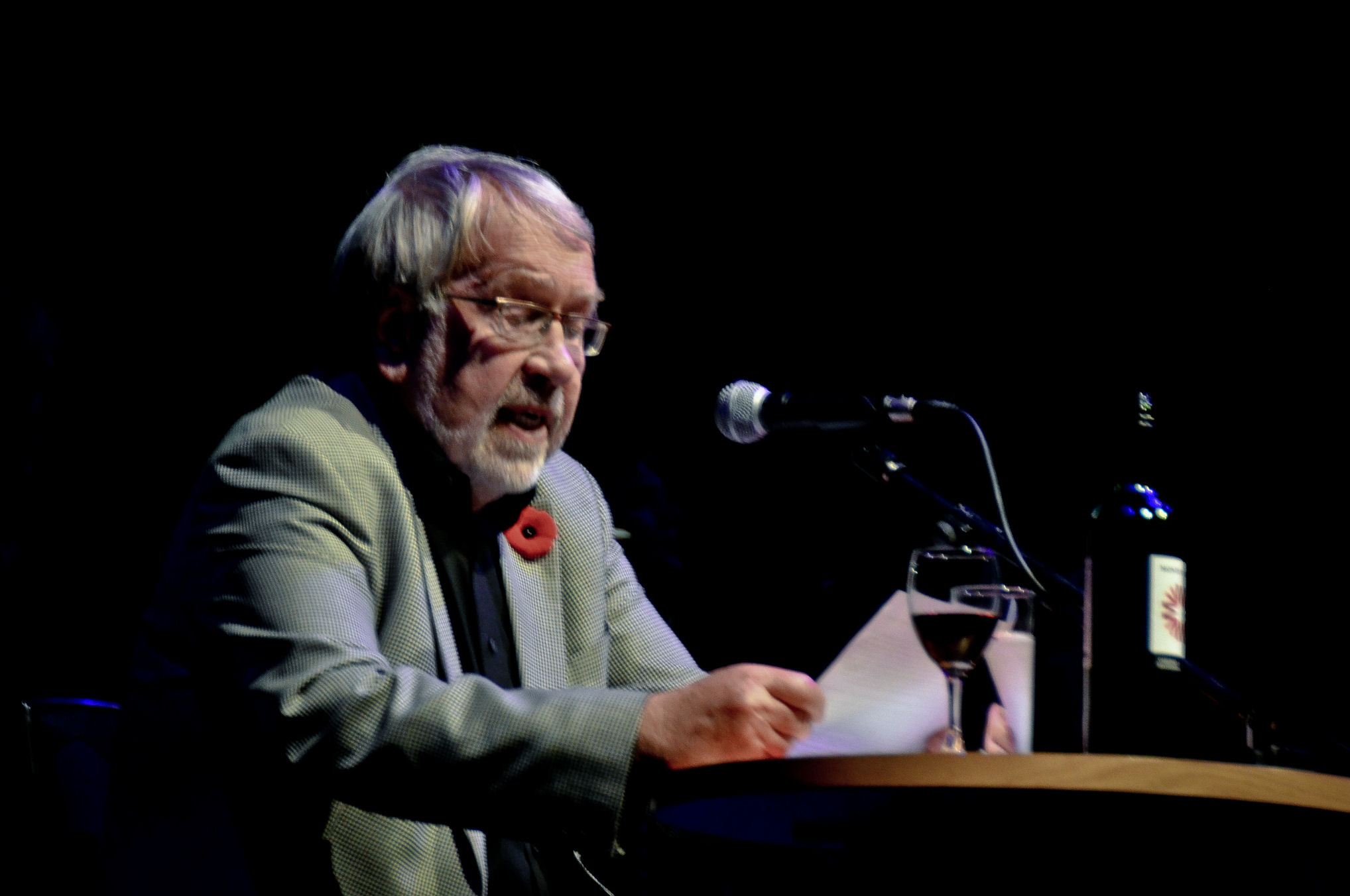
Iain Anderson, the narrator
The show is based around the songs of World War One with a linking narrative telling the story of an ‘everyman’ soldier, Jimmy MacDonald, who comes from ‘any village, town or city in Scotland’. The focus is consciously Scottish from the Music Hall urgings of ‘Keep Right On to the End of the Road’ to Jim Malcolm’s wonderful modern song ‘Jimmy’s Gone To Flanders’.
The songs include Music Hall, popular songs of the era, some recent folk songs and, of course, the songs of the Trenches. It was, and is, a powerful show that I would not hesitate either to recommend or to see again.
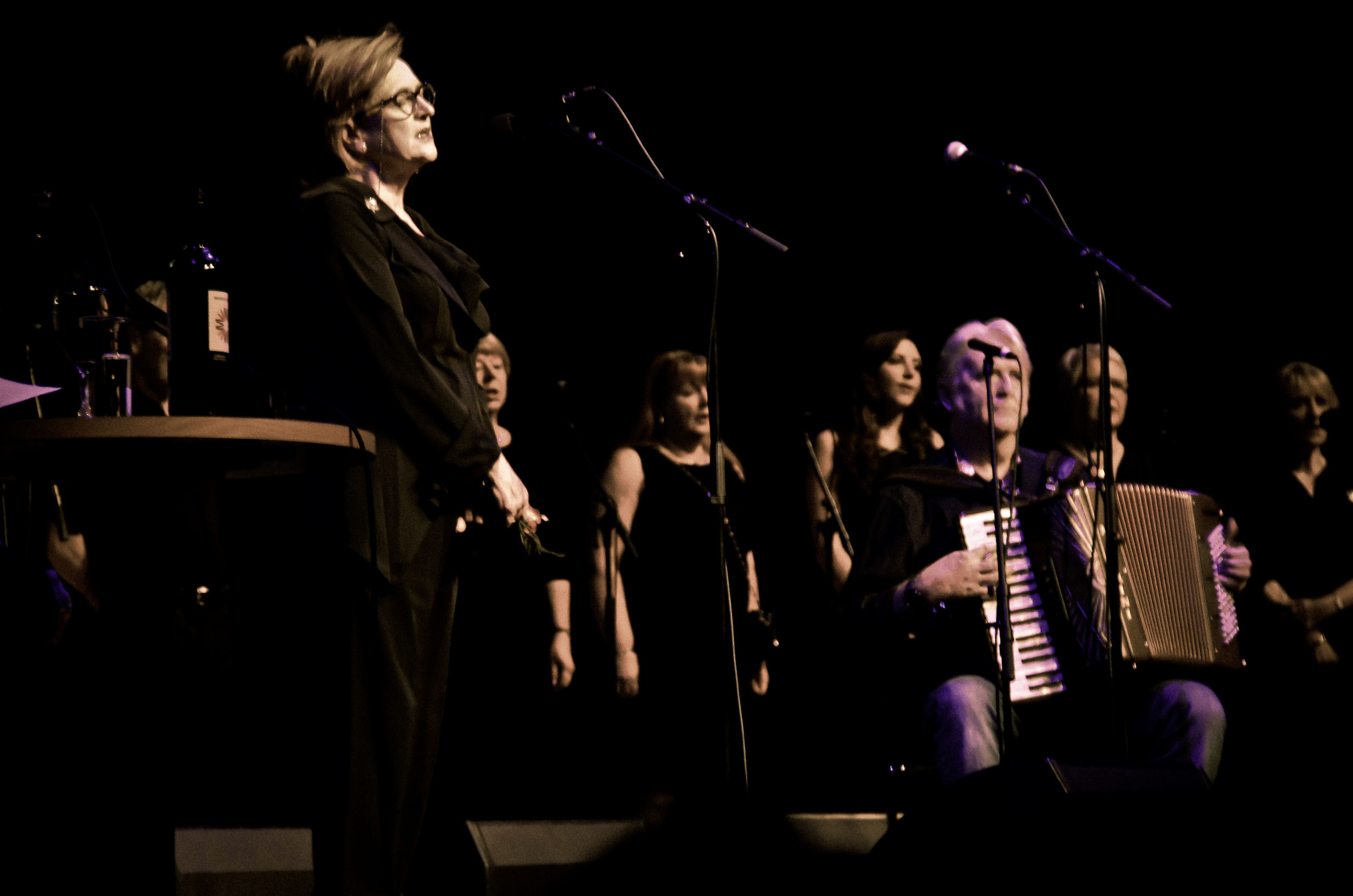
Barbara Dickson and Phil Cunningham; ‘Roses of Picardy’
The show gained immensely from the sheer quality of the talent on stage. This included well-established performers such as Barbara Dickson, Phil Cunningham and Dick Gaughan and also younger performers such as Siobhan Miller who was outstanding all evening. The performance was, though, an ensemble piece and all the more effective for that.
A century after its commencement, World War One continues to haunt our culture and not just in arguments with idiots such as Michael Gove. I think, tritely perhaps, there are many reasons for this. The reasons range from admiration for those who went and fought and died despite, as the war went on, knowledge of their likely fate, to horrified fascination at the industrialisation of carnage, the application of the idea of the assembly Line to the efficient manufacture of death.
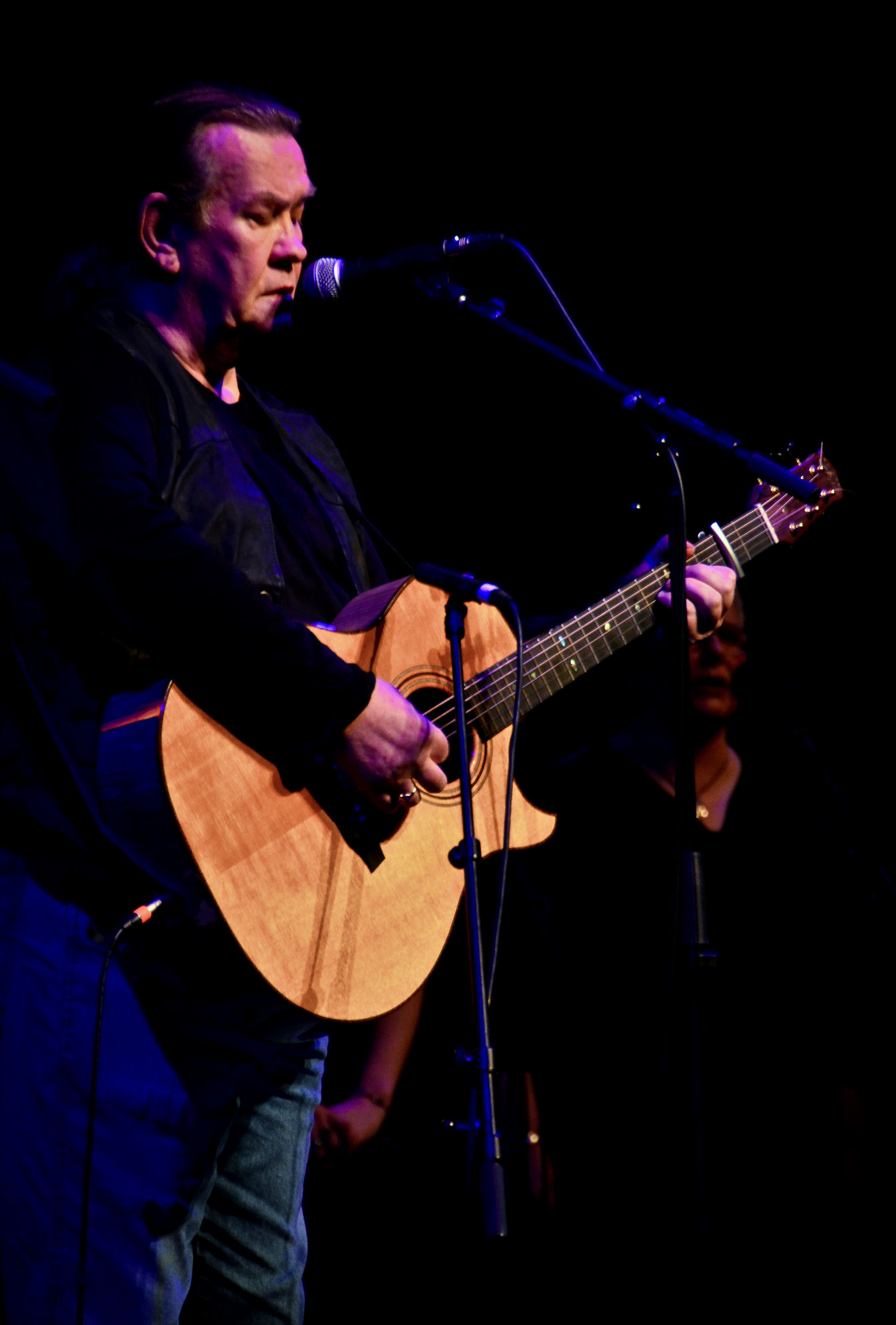
Dick Gaughan
There is also, I often sense, a feeling that it was World War One that finally stripped away any residual public innocence about the nature of war.
World War One also seems to me to mark the end of something else, the end of a way of life in the towns and villages and communities of Britain. The coup de grace may have been delivered by WW2 but it was WW1 that dealt the fatal blow. This is not only because of the scale of the butchery and the annihilation of a generation but also because of what followed. For example the decline of a rural way of life into our modern agricultural monoculture (an error not made by the French).
There is also, I think, a wary awareness and shadowy fear of what mass conflicts such as World Wars One and Two exemplify. The value of performances such as Far, Far From Ypres is precisely that they keep that awareness to the forefront as the generations who lived through those wars fade.
That is also why, despite my detestation for the military flummery and foolishness that accompanies it, I always wear a poppy at remembrance time – lest we forget.

Recent Comments