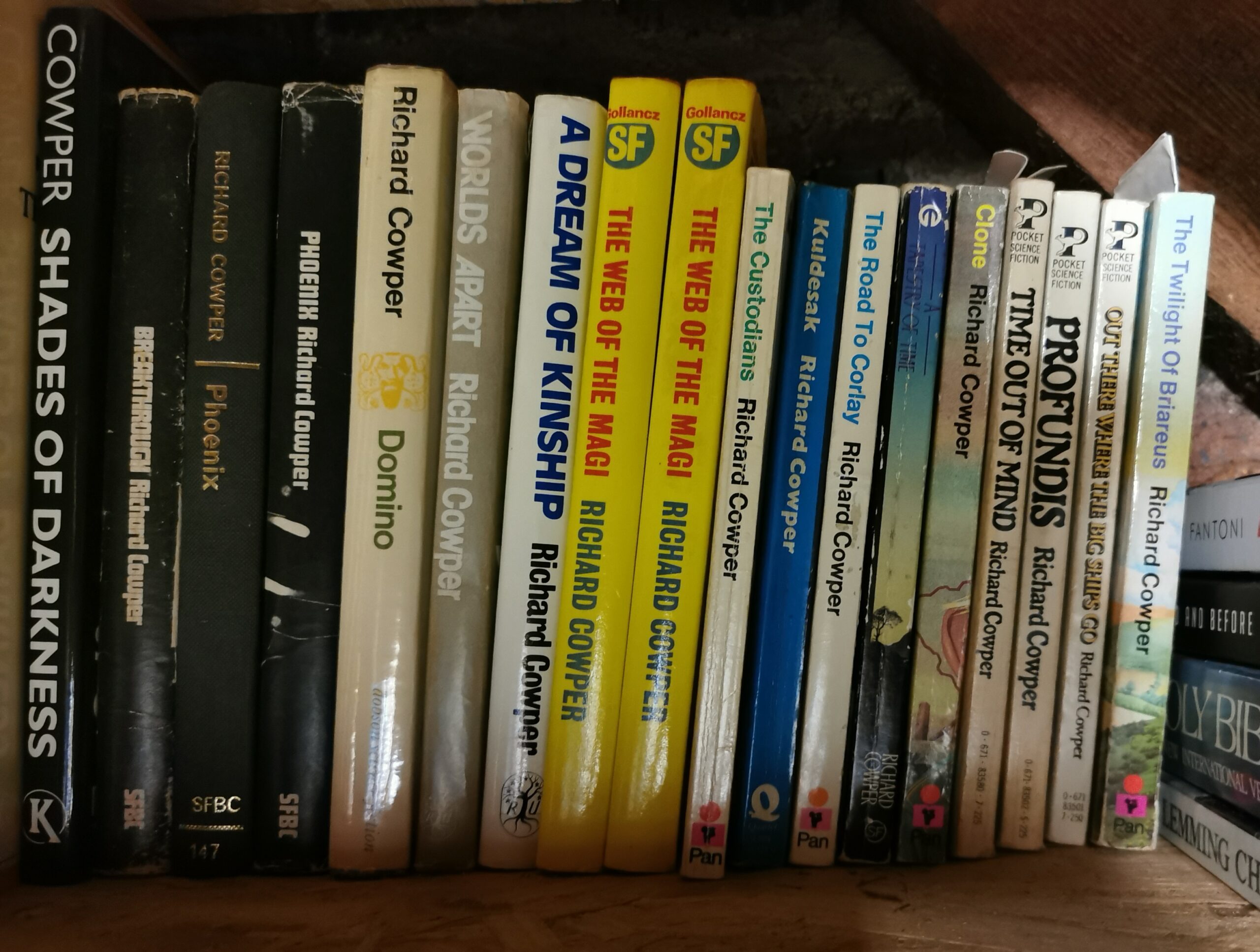
The Cowper collection
I’ve mentioned the current writing-in-progress here several times, and some explanation of why it is still ‘in progress’ might be in order for anyone interested – a limited audience, to be sure.
There have been two principal difficulties with writing it. The first is that most of 2021 was taken up with extensive revision of a short story collection and two novels; writing new stuff fell by the wayside. The second is that I’ve been floundering about the overall thematic content and the structure. It is theme and structure that give meaning to what would otherwise be a string of increasingly unlikely events. Most recently, I’ve been going through what I have already written of it, to read and work myself back into the world.
The story I’m writing is in the same ‘universe’ as Coyote in the Corner but set in a future after the Gaia Cascade. If that doesn’t mean anything to you then either look away now or go out and buy Coyote immediately to find out what I’m talking about.
The thematic element started to come together sitting in the car heading north to Elgin and Forres a month ago. A series of story elements came to me and with them came the overall story I wanted to tell. What came to me today while walking around Edinburgh city centre was the structure. Coyote is a collection of short stories, mostly, with one novella. For quite some time now it has been in my head that the model for the new stuff was probably something like M John Harrison’s Viriconium stories in their collected form. What was missing was a linking concept for what will be several pieces, at least one of which will be a short (by modern standards) novel, and that’s what came to me today – partly because of a non-fiction book I’ve just ordered that deals with my bigger theme, but also because I remembered a series of books by Richard Cowper that I enjoyed some years ago and I made a connection.
Who is Richard Cowper? I hear you ask, and no wonder as he has been somewhat forgotten. Christopher Priest’s obituaries for him in the link below give an outline.
***
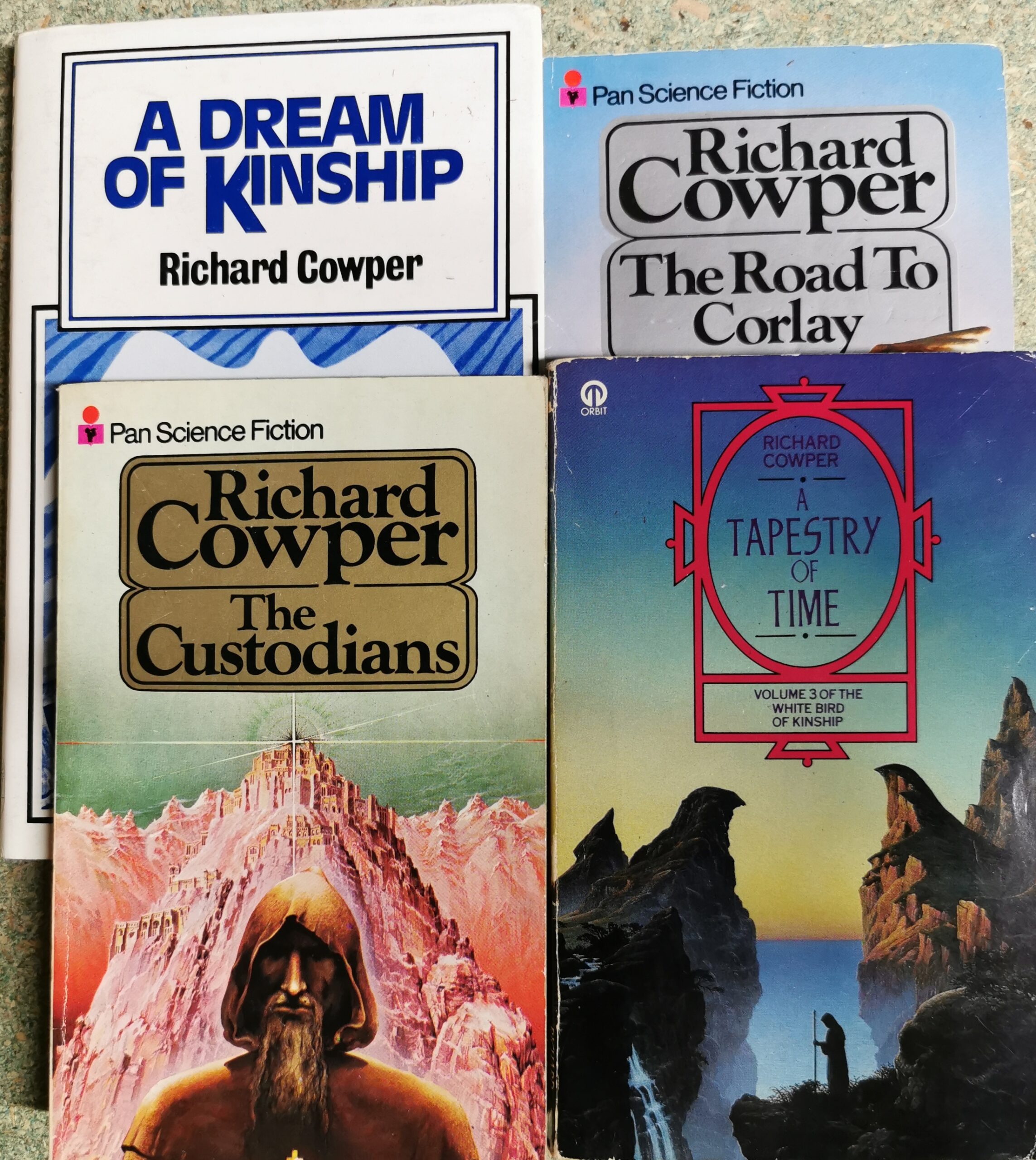
The White Bird of Kinship sequence
The books by Cowper that I remembered form what is usually called the White Bird of Kinship sequence. They are an early example of climate change forming a background to the plot. The sequence also has an explicit call back, missed by most if not all reviewers, to a much earlier novel by Cowper, Breakthrough (1968).
The details of the stories are not in themselves significant for what I have in mind, but the linking motif of Cowper’s initial short story (The Piper at the Gates of Dawn) and three subsequent novels is – not because I plan to do anything so crude as to pinch it, but because it suggested the approach that I will take.
I’m being vague because I’m still working all this out, but I was able to sit down on a bench in the quad of Old College and sketch out the elements of what the collection will look like when it is done. That helps the cogs turn in my mind when I’m writing, grinding out ideas that will be the hooks to snag the story elements. The end result looks like a lot of work, but that’s OK because I have a working idea now of the size of the task and the shape of the project. It also means that my subconscious will chunter a way and throw ideas into my notebook.
Some of you will recognise Piper at the Gates of Dawn as the title of Pink Floyd’s debut (and best) LP from 1967. Both Cowper and Pink Floyd took it, I think, from chapter 7 of The Wind In The Willows, in which Kenneth Graham invokes an unnamed entity who bears a striking resemblance to typical descriptions of Pan.

Gollancz published detective stories with the same distinctive yellow dust jackets. My Dad must have read them all, but they came from the central library in East Kilbride town centre. I remember walking into the new St Leonard’s library the week it opened (1972?), and it was like Aladdin’s cave.
The mention of Richard Cowper awoke some memories. I think I’ve read at least one of The Road to Corlay and Piper at the Gates of Dawn. I had to Google the plots but they do sound vaguely familiar. Another blast of nostalgia was the Gollancz SF yellow dust jackets. My guarantee of quality at St Leonard’s library! I think I must have read every one they had and then some. Another series I enjoyed was called something like New Writings in SF ##. No wonder I grew up strange.
Yes, the yellow dust jackets in St Leonard’s library were a good indication of quality. The one that stands out in memory was Colin Kapp’s ‘The Patterns of Chaos,’ that later came out in Panther with a Chris Foss cover. I must go and dig it out of the attic.